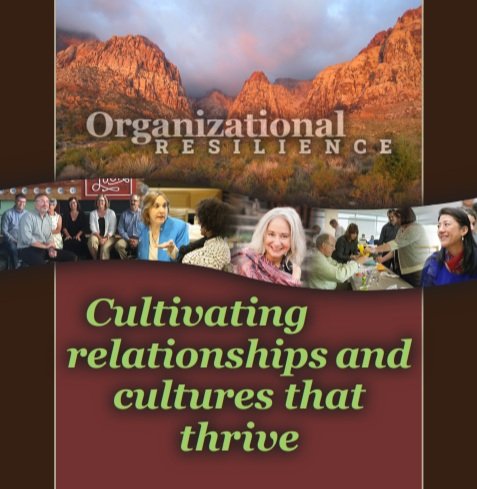
An Unlikely Resiliency Trait
/“You are so resilient!”
A client recently told me that she hears some version of this fairly regularly. While she understands it comes from a place of good intentions, she has mixed emotions about it.
Often when someone acknowledges another’s resiliency it is in the context of their admiration of the person’s strength, endurance, or determination. It is meant as a compliment; a recognition of the work being done. It can feel, unintentionally, heavy. As if resiliency is all about grit, toughness, or mental fortitude. People who feel they must be resilient in the face of their challenges can also feel exhausted by it.
I recently delivered my “Resiliency Reimagined” talk to a room full of senior HR leaders. At the event we were discussing what keeps them up at night – and acknowledging how our usual stress coping mechanisms of avoiding, suppressing, resisting, obsessing, or worrying are not effective strategies!
The invitation instead is to build sustainable resiliency – the kind that embodies mental, emotional, and social well-being.
That’s where an unexpected trait of resiliency comes in: social connections. Resilient people don’t go it alone. Meaningful relationships buffer our stress, provide mutual support, and give us a place to feel seen and heard during our peaks and our valleys. A resilient person’s energy is sourced in part from a feeling of belonging.
Genuine belonging allows us to show up authentically – with our hopes and fears, our strengths and weaknesses, our confidences and our vulnerabilities. When we feel like we truly belong there’s a sense of safety and security. It’s where we can flourish.
During my talk I asked participants, by a show of hands, “How many of you are good at asking for help?” Not a single hand went up. Then I asked, “How many of you are willing to help when asked?” A sea of hands raised. People in helping professions, and those who embody the spirit of servant leadership, tend to be willing to offer support, but don’t know how to ask for help for themselves.
Resilient relationships must be nurtured. They require mutual respect and trust. They call for reciprocity in shared effort, care, and support.
My learning journey of asking for help
I admit for a long time I was not great at asking for help. Heck, it didn’t even occur to me it was an option! My fierce independence can be a blessing (resourcefulness) and a curse (stubbornness).
One of my early opportunities to learn this lesson came when I was 35 years old. I joined some friends on the mountain for my first time ever snowboarding. I had heard it was a steep learning curve, so I elected to take an introductory class. The first run was full of catching edges. I was down more than I was up. After one fall I attempted to get up and discovered I couldn’t bear weight on my left wrist. When I switched to get up on the other side, I discovered I couldn’t bear weight on my right wrist. Yep, I broke them both! In the several weeks that followed I had a crash course in learning how to ask for and accept help!
Fast forward, I had a client challenge that I could not quite wrap my head around. I was at an impasse. That’s when I realized something. It’s in the struggle that we can seek support! I texted my mentor/coach Sally to ask for help. She eagerly replied, “would love to”. Within fifteen minutes we had a breakthrough!
Today, I am a member of The Upside – a consortium of diverse consultants who show up for each other regularly. There isn’t a day that doesn’t go by that there’s not a shout out of gratitude for what another member did to lend a hand. The generosity is abundant and contagious. And we are all better for it.
What’s your relationship to asking for help?
Asking for help does not display weakness. It builds strength. Seeking advice does not reveal incompetence. It reflects respect for another person’s insight.
Reflect on when and how you look to others in your orbit for support. If you want your team to come to you for help when they need it, you will want to role model a healthy way to do so, which includes not having all the answers!
Done well, asking for help can set the stage for impactful collaboration and contribution. It is also a signal that you hold someone in high regard and trust them with your vulnerability. Vulnerability is a pathway for connection, and connection, a pathway to resiliency.
Where can you seek support?
Where do you feel overwhelmed, lost, or stuck? What are you resisting? What’s on your plate that you could delegate? Consider these areas to be prime support-seeking opportunities!
How can you start asking for help?
If, like me, asking for help feels awkward, here are some tips to get started:
· Ask for someone’s opinion, perspective, or advice with the inquiry, “What do you think about …”
· Ask for feedback on something you are working on
· Share a goal and ask someone to be your accountability partner
· Try, “Hey do you have some time to brainstorm some ideas with me?”
Asking for help is a sign of a humble leader committed to growth. And you’ll find that giving and receiving help is an investment in your relationships and your resiliency!
P.S. Can’t I just ask AI? Sure you can, but remember, resiliency resides in cultivating the kind of relationships that bring us the kind of connection we will only experience through real conversations.
You likely already ask, “How can I help?” Consider adding to your repertoire, “Could you help me?”